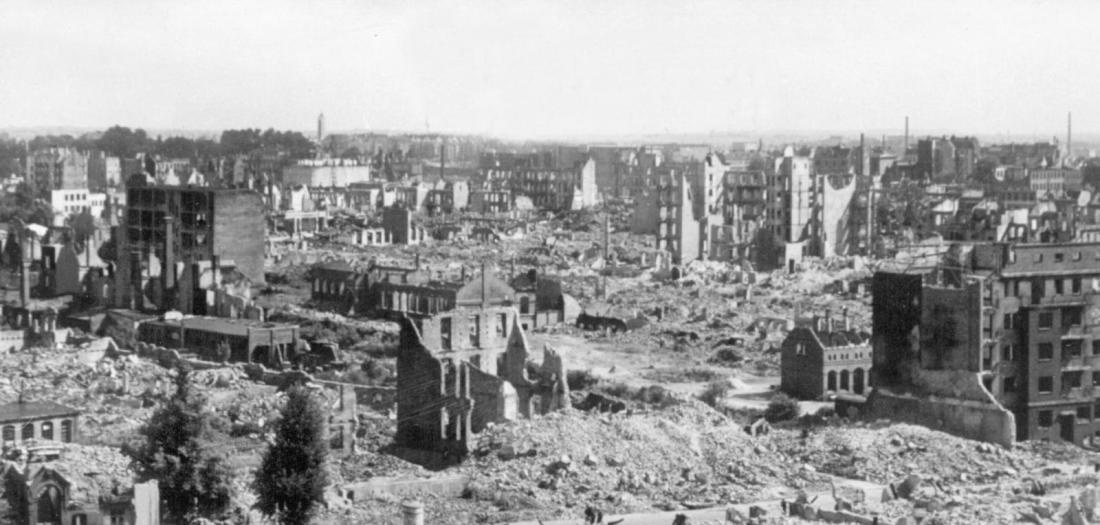
Immaginate un mondo diverso, un futuro totalmente sconvolto in cui l’ordine “naturale” delle cose viene meno. Le risorse della Terra sono finite, il petrolio è terminato o il costo della sua estrazione supera il ricavo della vendita. Senza petrolio, la nostra società si sfalda: dall’impossibilità di trasportare i cibi da una parte all’altra del mondo alla mancata manutenzione di impianti di energia. Basta che soltanto un tipo di energia su cui si basa la nostra società si estingua e il futuro cambia radicalmente: niente più supermercati, abiti, trasporti, niente più internet, tecnologia, luce, gas, acqua. Potreste dire che questo panorama sia un po’ troppo apocalittico, ma prendiamo come esempio il peggio che possa capitare. L’estrema fiducia nella scienza e nella tecnologia sta iniziando a vacillare, il neo-positivismo presenta qualche crepa.
L’ordine sociale dunque si scompiglia, si ritorna indietro nel tempo, ma con quali conseguenze? Siamo ancora capaci di vivere senza luce, gas, automobile, procacciandoci il cibo senza acquistarlo? Siamo ancora in grado di coltivare per noi stessi, senza macchinari, trattori e tecnologie moderne? Allevare bestiame e sopravvivere ai freddi invernali e alla siccità estiva?
La rivoluzione è in atto: quanti perderebbero la vita? Quanti potrebbero resistere a un semplice raffreddore, se l’unico riscaldamento possibile è quello del camino, della stufa, proprio di quella stufa che abbiamo buttato via perché vecchia e inutile?
Senza frigorifero e congelatore, i cibi marciscono in fretta. Le scatolette che ci siamo accaparrati prima del collasso stanno per finire. Perché non abbiamo comprato un maiale e qualche gallina? Che sprovveduti…
E chissà come si coltiva la lattuga, in che periodo si piantano le patate, le carote, gli spinaci, le bietole, i cavoli… i pomodori sono seccati sulla pianta, l’insalata è stata divorata dalle lumache.
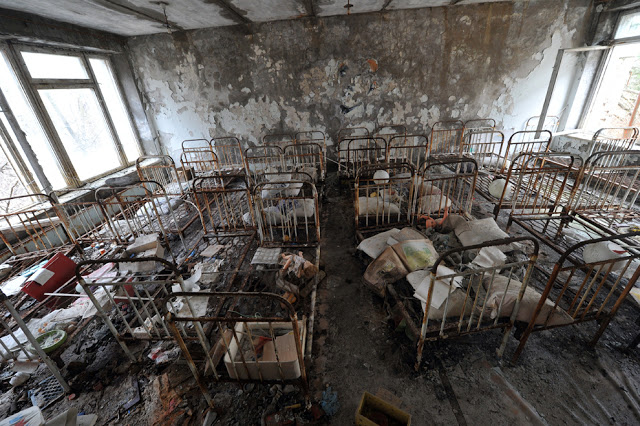
Indubbiamente, chi vive in campagna ha qualche speranza in più di sopravvivere, forse perché ha disponibilità di mezzi vecchi e rudimentali, forse perché ha sentito qualche anziano parlare dei metodi antichi. In città è il delirio, altro che l’apocalisse: si coltivano i giardini, ma la gente muore e si uccide, l’ordine sociale non si è ancora ristabilito. Il fiume è contaminato, non hanno nemmeno un ruscello per lavare i panni con la cenere. Si accendono fuochi negli alloggi e le persone muoiono intossicate. I bambini piangono affamati e rantolano. Per le strade è la guerra. Chissà per quanto ancora… finché la popolazione non sarà decimata e non sarà morto chi non sa badare a se stesso e deve prendere dagli altri il necessario; allora, gli abili superstiti potranno riorganizzarsi, salvaguardare la propria incolumità e creare una nuova società, non “civilizzata”. Forse le famiglie si uniranno in tribù, provvederanno ai beni necessari per la loro gente, trattando con le altre tribù. Ecco l’unica salvezza.
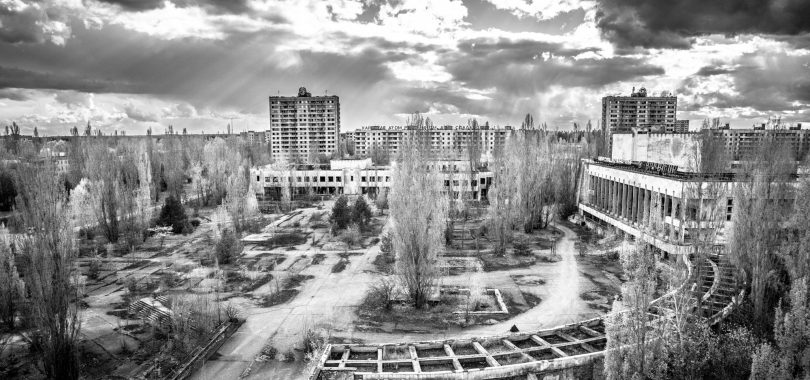
In campagna i terreni sono stati uniti e suddivisi nuovamente, secondo le necessità di ogni gruppo. I più avidi, coloro che con violenza o sotterfugi hanno cercato di accaparrarsi maggiori beni o terreni, sono stati allontanati o, nel peggiore dei casi, uccisi. Una nuova sostenibilità è nata dal cataclisma, dal collasso economico, dalla guerra, dallo scoppio nucleare che ha messo in ginocchio il mondo intero.
Una nuova sensibilità verso la natura e i suoi frutti. Un nuovo habitat (che è l’habitat più antico, l’unico habitat, quello naturale) è rinato negli stessi luoghi, con le antiche tradizioni, le antiche saggezze. La vegetazione si impossessa delle città, dei palazzi, ingurgita tutta l’avidità umana, per farla sbocciare in un casto, puro verde. La natura è tornata, gli dei sono scesi sulla terra, con le loro leggi e le loro regole. Ecco la rinata spiritualità.
Tutto questo può avvenire domani, fra dieci anni, fra cento o fra mille. La ruota del tempo spazza via i residui dell’egoismo umano. La natura vince sempre e più abbiamo cercato di arrestarla, più l’abbiamo torturata, più l’impatto è stato devastante.
Ricordiamoci che ciò che lasciamo su questo mondo sarà il paesaggio in cui i nostri figli dovranno vivere. Ricordiamoci che un giorno, forse, vivremo di nuovo, nel sangue dei nostri pronipoti. Il pattume che ci lasciamo alle spalle sarà parte integrante del nostro panorama futuro, della nostra terra. La contaminazione minerà la vita dei nostri eredi, di noi stessi. Un giorno ricorderemo con disprezzo la nostra ottusità di adesso.
Hvars þú böl kannt, kveð þú þér bölvi at ok gef-at þínum fjándum frið.
“Where you recognise evil, speak out against it and give no truces to your enemies”
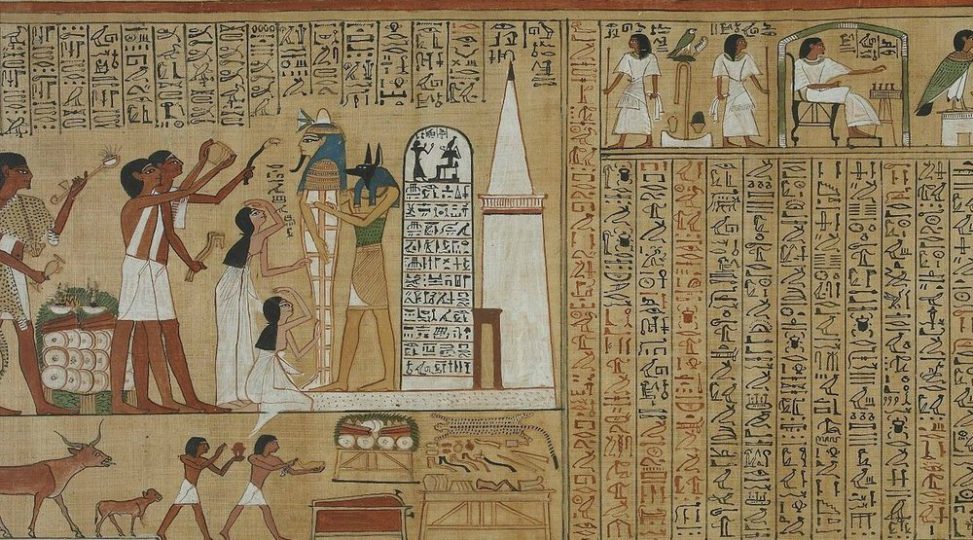
The Egyptian funeral text called “Book of the Dead” collects a series of formulas, or rather single texts, combined with illustrations, starting with the word “ro”, that means “speech”, “formula”, “enchantment”. Their funcion is closely related with the funeral rite, i. e. to infuse into the dead a mystical knowledge of the afterlife, or to identify him with the divine.
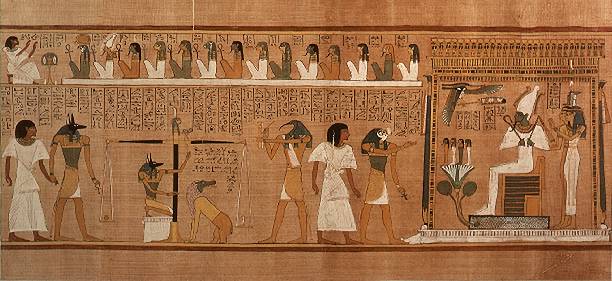
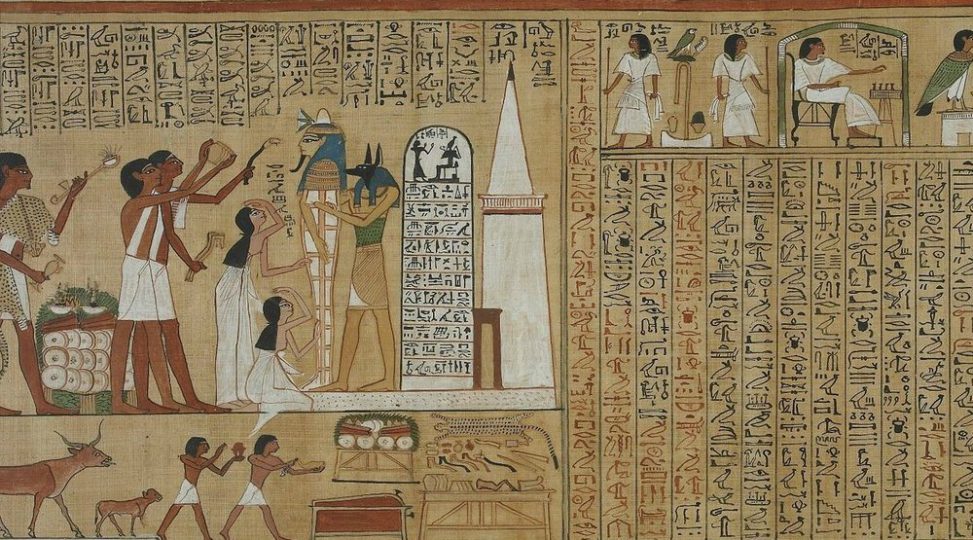
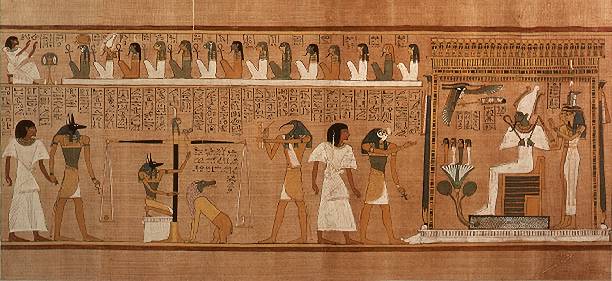
In the ancient Egyptian religion the ritual of psichostasia was very important and, in particular, the weighing of souls (the heart) in presence of Osiris (the god reborn, therefore the god of the dead, the Moon, the Sun and the Nile). The weighing was task of the god Toth (god of magic, writing, mathematical and geometric sciences, represented with bird-head), and it consisted of putting on the plates of a scales the soul of the dead, led by the god Anubis (the dog Cerberus), and the sacred feather of Maat, goddess of Justice. Of course, the weight of the feather had to be bigger than the weight of the soul.
The weighing of the soul of the dead (the heart)
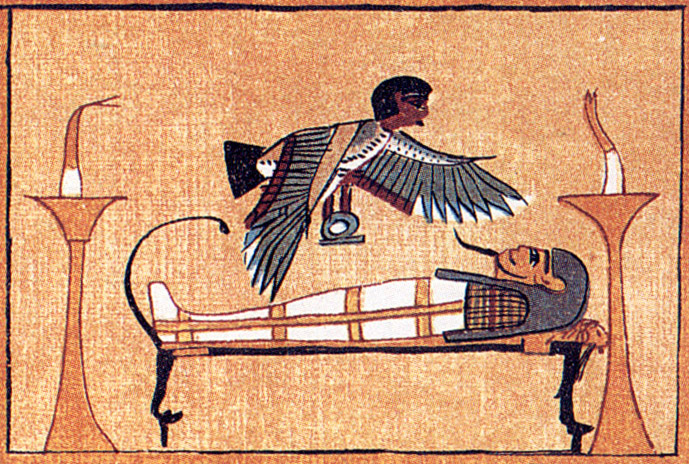
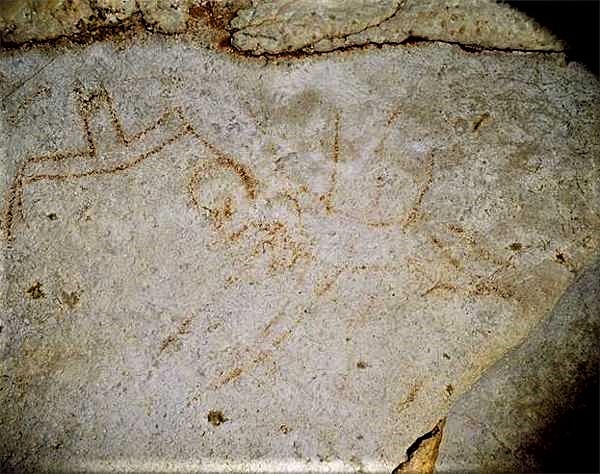
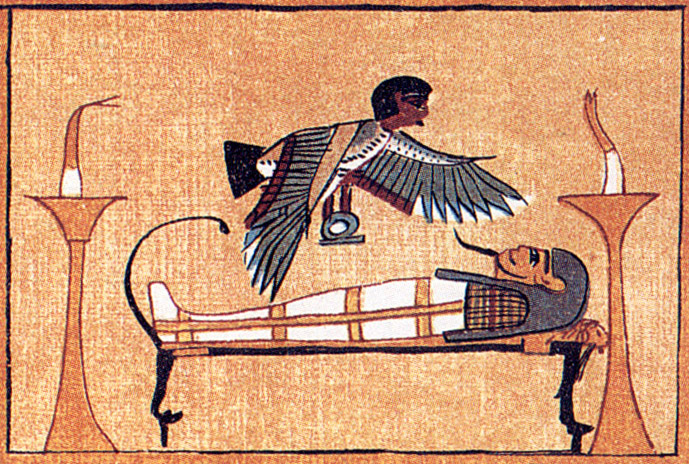
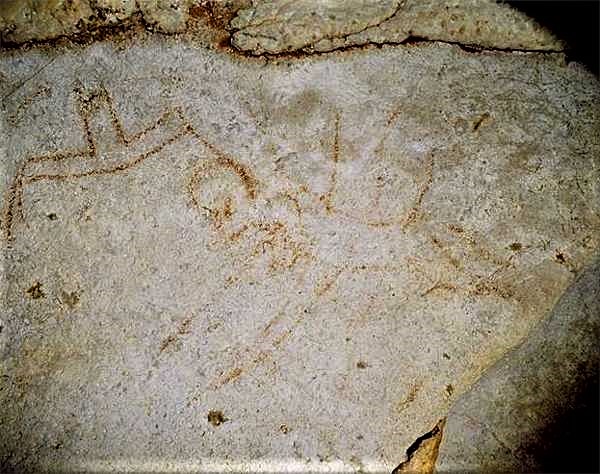
If we study thoroughly the name and the symbols of these texs, we understand that the Book of the Dead, “ru nu peret em heru”, was a magic and ritual formulary used to “simplify” the reincarnation of the ancestor. The literal meaning of the title is “Book of Coming Forth by Day”. The strangeness of the words “coming forth” (i. e. “go out”) and “day” in a funeral text makes us think that the book helps more an unborn child that a dead man condemned to eternal life. Indeed, this is the meaning: “coming forth by day” means “to be (re)born”. According to the myth, the dead who reads or interprets the formulas becomes himself the god who wrote them: Toth, the ibis. The symbolism of the bird undoubtedly bring us back to the popular one: the bird as life-bringer (the stork) and the migratory bird like the swallow returning in spring, season of the rebirth of nature (Ragnarǫk). This symbolism is already present in the Neanderthal tradition: the cave paintings depict flying birds sitting on sticks or figures half man and half birds, just as symbols of reincarnation and life. The bird Toth is therefore the one who brings life and the dead man who becomes the god is a metaphor of is own rebirth (the sperm reaches the egg).
The “bird-soul” of the deadThe “wounded man”, Pech Merle, Neanderthal site
In the same way we can interpret the presence of Osiris, god of the Moon and the dead, but also god of the Sun and the Nile. The god-sun of the afterlife, the god of night (the Sun’s death), is the double of Ra, the god of the Sun of noon. Ra has a sparrow head (hieracocephalus, as Horus) and he has the circle of the Sun above his head, surrounded by the ureus (the snake, symbol of the Eternal Return, but also of the umbilical cord). Ra is the fulfilment of reincarnation, i. e. the accomplished rebirth, he is the child. At night Ra falls in the afterworld, carried by the boat Mesektet, and he merges with Osiris. Osiris, god of the dead and the Nile, is the fetus in the womb, in the uterus, the one who feeds himself through the umbilical cord and, at the same time, he is the dead in the underworld waiting to be reborn. The umbilical cord ends in the placenta, that’s why Osiris is the god of the Nile: the river represented fertility and wealth, because the vegetation grew luxuriant around it and the crops were possible thanks to its silt, the residue left by the Nile after the yearly floods. Moreover, the delta, if seen from above, reminds the shape of a tree (Yggdrasill), and both refers to the umbilical cord and the ramifications of the placental blood vessels.
Osiris is the dead, but also the fetus who, with the blessing of Toth, will choose the ancestor, the dead who will reincarnate. For this purpose, the scales decides if the soul of the dead is good, that is, worthy of being born again. In addition, the hat of Osiris has horns and feathers, both symbols of rebirth: the feathers are linked to the symbolism of the bird, the horns symbolize the struggle for life during the reproductive period of the bovids.
The dead was named “Osiris” in the formula: Osiris [name]
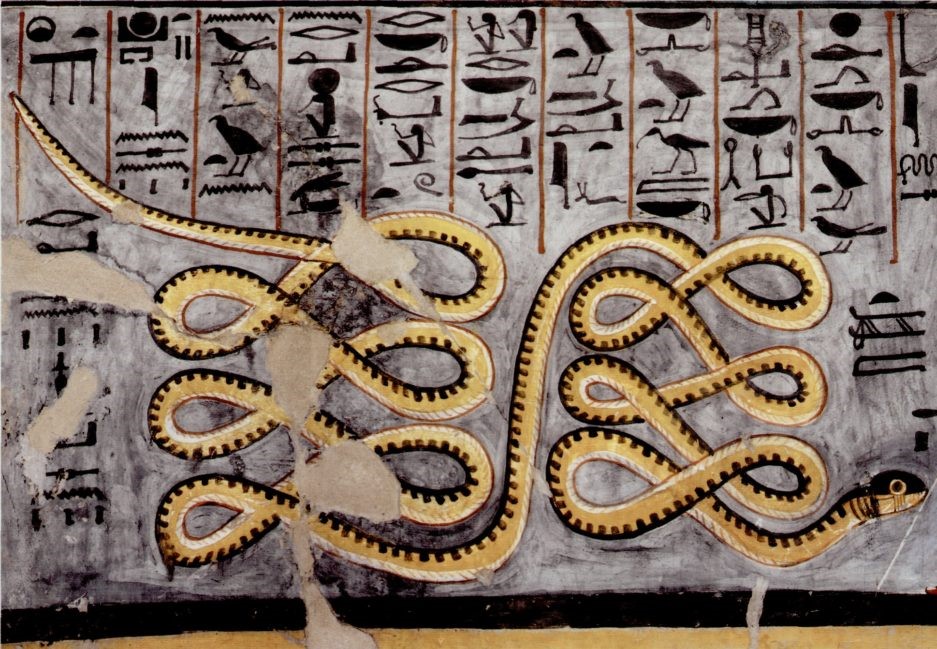
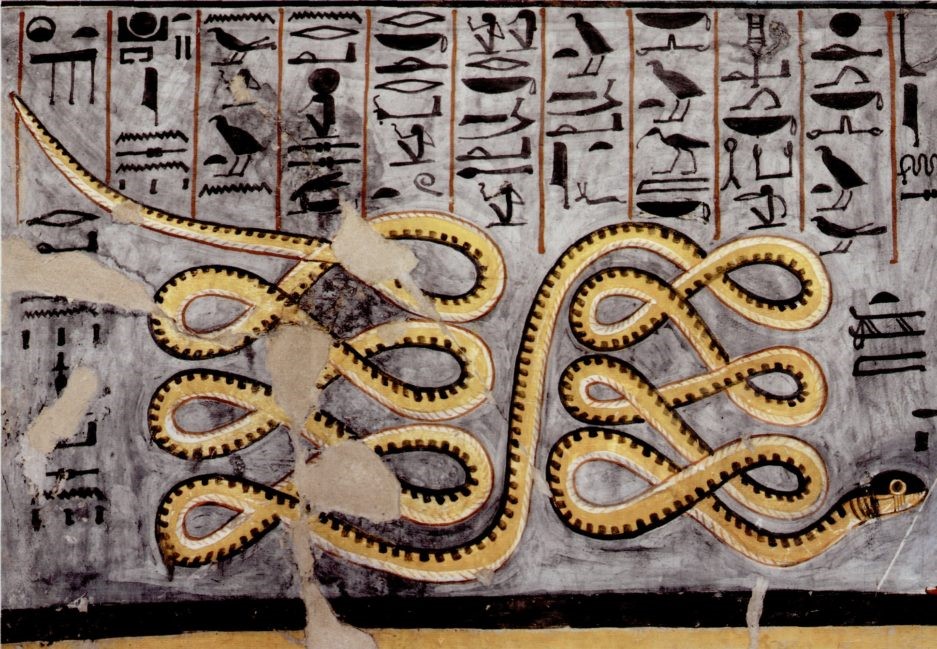
So, why does the dead become a god? In order to access the afterlife, the Fields of rushes (here, the rush can represent the umbilical cord) and before being judged by Toth and Osiris, the soul have to undertake an initiatory path: the dead climbs hills and descends into caverns (symbols of the womb) and he have to face animals and terrible anthropomorphic beasts (he must fight to be reborn, to reach the egg. See also the initiatory path of the Kumari in Nepal). After that, if he has passed the tests (if he proved honourable), he will be judged worthy of being (re)born. His soul (ba and akh) will rejoin Ra in order to cross the sky on the boat of Sun and to defeat Apopi, the enormous serpent: i. e. to defeat symbolically the snake-umbilical cord, to be born (or reborn), to “coming forth by day”… thus the dead becomes the bird Toth, symbol of rebirth, and Osiris, the fetus in the womb that chooses the ancestor, finally Ra, the newborn, the ancestor reincarnated.
L’antico testo funerario egizio chiamato “Libro dei morti” raccoglie una serie di formule, o meglio singoli testi accompagnati da illustrazioni che iniziano con la parola ro, cioè “discorso”, “formula”, “incantesimo”. La loro funzione è strettamente legata al rito funebre: infondere nel defunto una conoscenza mistica dell’aldilà o identificarlo con la divinità stessa.
Nella religione egizia era di fondamentale importanza il rito della psicostasia, cioè la pesatura dell’anima del defunto (del cuore) al cospetto del dio Osiride (il dio resuscitato, quindi il dio dei morti, della Luna, del Sole e del Nilo). La pesatura era compito del dio Thot (dio della magia, della scrittura, delle scienze matematiche e geometriche, rappresentato con testa di ibis) e consisteva nel riporre sui piatti di una bilancia l’anima del defunto, accompagnata dal dio Anubi, e la piuma sacra di Maat, dea della giustizia. Il peso della piuma, naturalmente, doveva essere maggiore di quello dell’anima.
La pesatura dell’anima del defunto (cuore) operata da Thot di fronte a Osiride
Se andiamo ad approfondire il nome e i simboli presenti in questi testi, possiamo interpretare il Libro dei morti, “ru nu peret em heru”, come un formulario magico e ritualistico atto a facilitare la reincarnazione del defunto. Il significato letterale del titolo è infatti “libro per uscire al giorno”. La stranezza delle parole uscire e giorno in un testo funerario ci fa pensare che il libro sia indirizzato più a un bambino nascituro che a un morto condannato alla vita eterna. Ed è infatti questo il senso: per uscire al giorno vale a dire “per uscire alla vita”, cioè (ri)nascere. Secondo il mito, il defunto che legge o interpreta le formule diventa il dio che le ha scritte, cioè Thot, l’ibis. La simbologia aviaria si può ricondurre senza dubbio a quella popolare, meglio conosciuta: l’uccello come portatore di vita (la cicogna, ad esempio) e l’uccello migratore come la rondine che ritorna in primavera, stagione della rinascita della natura (Ragnarǫk). Questa simbologia è presente già nella tradizione Neanderthal: le pitture rupestri raffigurano uccelli in volo, posati su bastoni o figure mezze uomo e mezze uccello, proprio come simboli di rinascita e di vita. L’uccello Thot è quindi colui che porta la vita e il defunto che si impersona in lui è metafora della sua stessa rinascita.
Anima-uccello del defunto“L’uomo ferito”, Pech Merle, Neanderthal
Allo stesso modo si può interpretare la presenza di Osiride, dio della Luna e dei morti, ma anche del Sole e del Nilo. Il dio-sole dell’aldilà, della notte, è la controparte, l’altra faccia della medaglia di Ra, il dio del sole del meriggio. Ra è ieracocefalo (testa di sparviero) e ha il disco del sole sul capo circondato dall’ureo (il serpente, simbolo dell’eterno ritorno ma anche del cordone ombelicale), è il compimento della reincarnazione, cioè l’avvenuta (ri)nascita, è il bambino. Ma di notte Ra scende nell’oltretomba sulla barca Mesektet, fondendosi a Osiride. Osiride, dio dei morti che rappresenta anche il Nilo, è il feto nel grembo materno, nell’utero, che si nutre attraverso il cordone ombelicale e, contemporaneamente, il defunto nel “regno dei morti” che attende di rinascere. Il cordone ombelicale termina nella placenta, ed ecco perché Osiride è il dio del Nilo: per gli egizi il fiume rappresentava la fertilità, l’abbondanza, perché attorno ad esso la vegetazione cresceva rigogliosa e le coltivazioni erano possibili grazie al limo, la terra residuale che il Nilo lasciava dopo le inondazioni. Il delta del fiume ricorda inoltre un albero (Yggdrasill), ed entrambi rimandano al cordone ombelicale e alle ramificazioni dei vasi sanguigni della placenta.
Quindi Osiride è il feto che con la benedizione di Thot sceglierà l’antenato, il defunto in cui reincarnarsi e, perché questo possa accadere, la bilancia decide se la sua anima è buona, cioè degna di rinascere. Inoltre il copricapo di Osiride presenta corna e piume, altri due simboli di rinascita: le piume sono riconducibili alla simbologia dell’uccello, mentre le corna sono il simbolo della lotta per la vita nel periodo riproduttivo dei bovidi.
Il defunto veniva appellato “Osiride” nelle formule: l’Osiride [nome].
Ma perché il defunto diventa dio? L’anima del defunto per accedere alle soglie dell’aldilà, i Campi dei giunchi (il giunco sembra rappresentare il cordone ombelicale) e prima di essere posta sotto giudizio da Thot e Osiride, deve sostenere un vero e proprio percorso iniziatico: attraversa cancelli, colli e caverne (simboli del grembo materno) e deve affrontare animali e bestie antropomorfe terribili (deve lottare per la vita, per raggiungere l’ovulo). Dopo ciò, se avrà superato la prova (se si dimostrerà valoroso), dovrà essere giudicato degno di rinascere, e la sua anima (ba e akh) si ricongiungerà con Ra per attraversare il cielo sulla barca solare e per sconfiggere Apopi, rappresentato come un enorme serpente: quindi per sconfiggere simbolicamente il serpente-cordone ombelicale, cioè per venire al mondo, per uscire al giorno… e così il defunto diventa l’uccello Thot, simbolo di reincarnazione, e Osiride, il defunto che deve rinascere e il feto nel grembo materno, quindi Ra, il bambino nato, l’antenato finalmente reincarnato.
Il serpente Apopi, simbolo del cordone ombelicale e del cordone prolassato
“Looking towards the sea, but in the centre of the whole island, there was a plain which is said to have been the fairest of all plains and very fertile. Near the plain again, and also in the centre of the island at a distance of about fifty stadia, there was a mountain not very high on any side. In this mountain there dwelt one of the earth born primeval men of that country, whose name was Evenor, and he had a wife named Leucippe, and they had an only daughter who was called Cleito. The maiden had already reached womanhood, when her father and mother died; Poseidon fell in love with her and had intercourse with her, and breaking the ground, inclosed the hill in which she dwelt all round, making alternate zones of sea and land larger and smaller, encircling one another; there were two of land and three of water, which he turned as with a lathe, each having its circumference equidistant every way from the centre, so that no man could get to the island, for ships and voyages were not as yet. He himself, being a god, found no difficulty in making special arrangements for the centre island, bringing up two springs of water from beneath the earth, one of warm water and the other of cold, and making every variety of food to spring up abundantly from the soil. He also begat and brought up five pairs of twin male children; and dividing the island of Atlantis into ten portions, he gave to the first-born of the eldest pair his mother’s dwelling and the surrounding allotment, which was the largest and best, and made him king over the rest; the others he made princes, and gave them rule over many men, and a large territory. And he named them all; the eldest, who was the first king, he named Atlas, and after him the whole island and the ocean were called Atlantic1.”
Plato, Critias
1Some scholars exlude the identity of Altas with the titan, others accept it. Remember that the hero or the mythical figure in general represents a symbol, a pattern, so the inconsistencies that arise between the various myths are admissible and are also ways to include that pattern in different situations, in different metaphors.
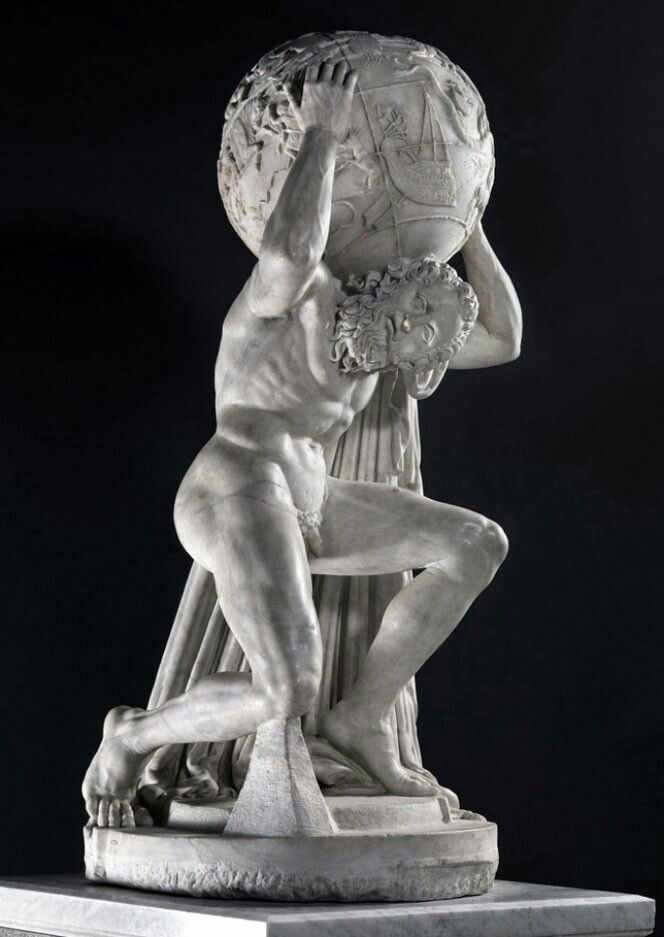
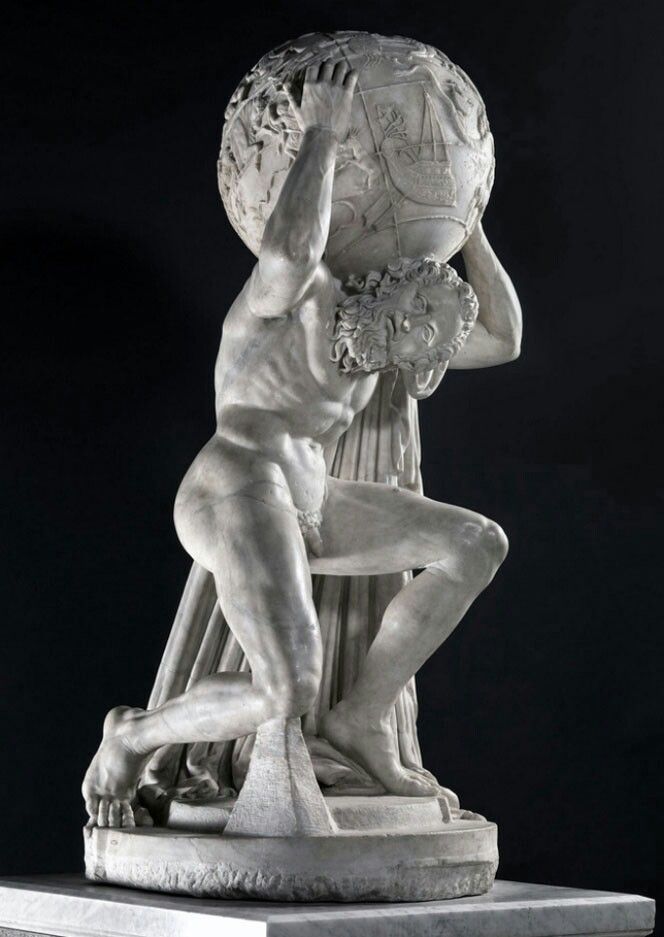
Atlas, who “holds up” the World: the Sun, the centre of our Solar Syistem, and the gravity of the Earth
“Vicino al mare, ma nella parte centrale dell’intera isola, c’era una pianura, che si dice fosse di tutte la più bella e garanzia di prosperità, vicino poi alla pianura, ma al centro di essa, a una distanza di circa cinquanta stadi, c’era un monte, di modeste dimensioni da ogni lato. Questo monte era abitato da uno degli uomini nati qui in origine dalla terra, il cui nome era Euenore e che abitava lì insieme a una donna, Leucippe. Generarono un’unica figlia, Clito. La fanciulla era ormai in età da marito, quando la madre e il padre morirono. Poseidone, avendo concepito il desiderio di lei, sì unì con la fanciulla e rese ben fortificata la collina nella quale viveva, la fece scoscesa tutt’intorno, formando cinte di mare e di terra, alternativamente, più piccole e più grandi, l’una intorno all’altra, due di terra, tre di mare, come se lavorasse al tornio, a partire dal centro dell’isola, dovunque a uguale distanza, in modo che l’isola fosse inaccessibile agli uomini: a quel tempo infatti non esistevano né imbarcazioni né navigazione. Egli stesso poi abbellì facilmente, come può un dio, l’isola nella sua parte centrale, facendo scaturire dalla terra due sorgenti di acqua, una che sgorgava calda dalla fonte, l’altra fredda; fece poi produrre dalla terra nutrimento d’ogni sorta e in abbondanza. Generò cinque coppie di figli maschi, li allevò e dopo aver diviso in dieci parti tutta l’isola di Atlantide, al figlio nato per primo dei due più vecchi assegnò la dimora della madre e il lotto circostante, che era il più esteso e il migliore, e lo fece re degli altri, gli altri li fece capi e a ciascuno diede potere su un gran numero di uomini e su un vasto territorio. Diede a tutti dei nomi, a colui che era il più anziano e re assegnò questo nome, che è poi quello che ha tutta l’isola e il mare, chiamato Atlantico perché il nome di colui che per primo regnò allora era appunto Atlante1…”
Platone, Crizia
1 Alcuni studiosi escludono l’identità del re Atlante con il titano, altri invece la ammettono. Si ricordi che l’eroe o la figura mitica in generale rappresenta un simbolo, un modello, quindi le incongruenze che sorgono tra i vari miti sono da una parte ammissibili, dall’altra sono modi per includere quel modello in situazioni diverse, in differenti metafore.
Atlante, colui che “sorregge” il mondo: il Sole, centro del nostro Sistema solare, e la gravità terrestre


 Belus
Belus 