
Belus – Per uscire al giorno
Album: Ursa Major, Ursa Minor
On Youtube: https://www.youtube.com/watch?v=Aq1MC-kn7mw
ENGLISH VERSION
Belus – Coming Forth by Day
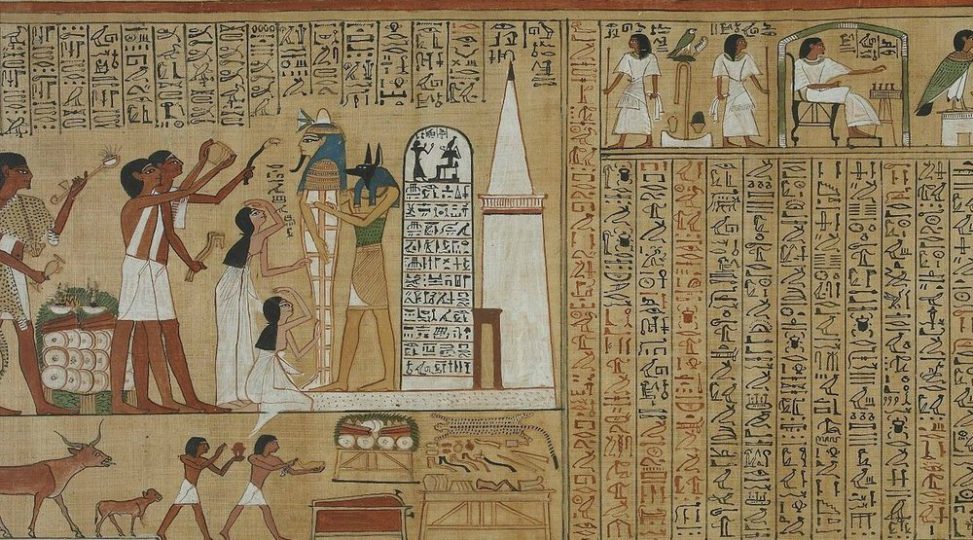
The Egyptian funeral text called “Book of the Dead” collects a series of formulas, or rather single texts, combined with illustrations, starting with the word “ro”, that means “speech”, “formula”, “enchantment”. Their funcion is closely related with the funeral rite, i. e. to infuse into the dead a mystical knowledge of the afterlife, or to identify him with the divine.
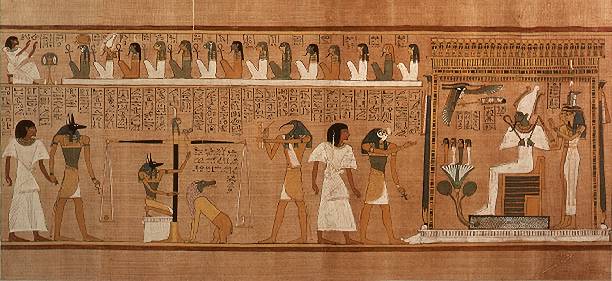
In the ancient Egyptian religion the ritual of psichostasia was very important and, in particular, the weighing of souls (the heart) in presence of Osiris (the god reborn, therefore the god of the dead, the Moon, the Sun and the Nile). The weighing was task of the god Toth (god of magic, writing, mathematical and geometric sciences, represented with bird-head), and it consisted of putting on the plates of a scales the soul of the dead, led by the god Anubis (the dog Cerberus), and the sacred feather of Maat, goddess of Justice. Of course, the weight of the feather had to be bigger than the weight of the soul.
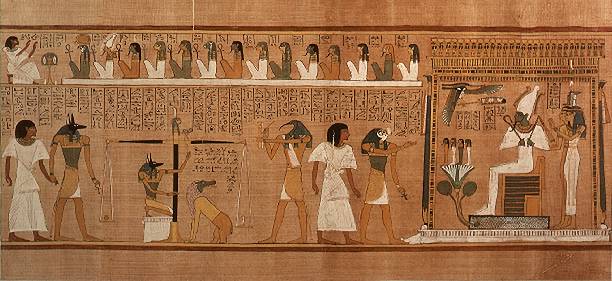
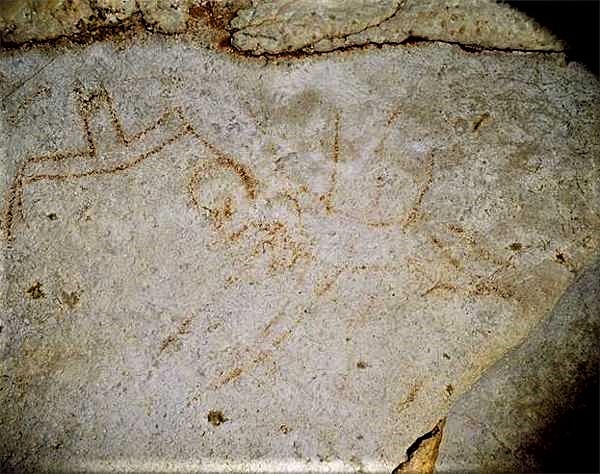
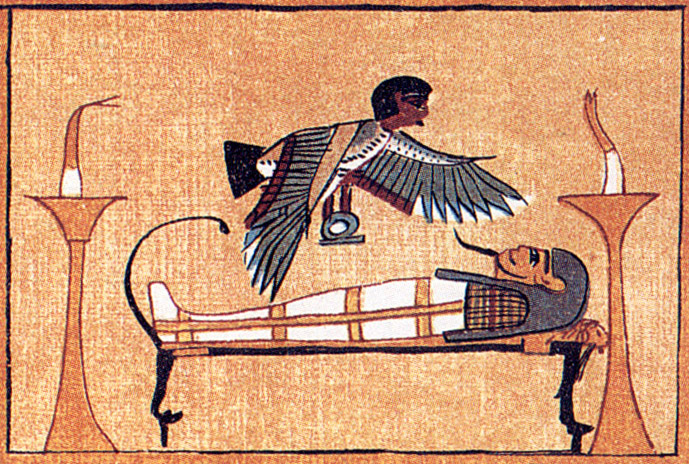
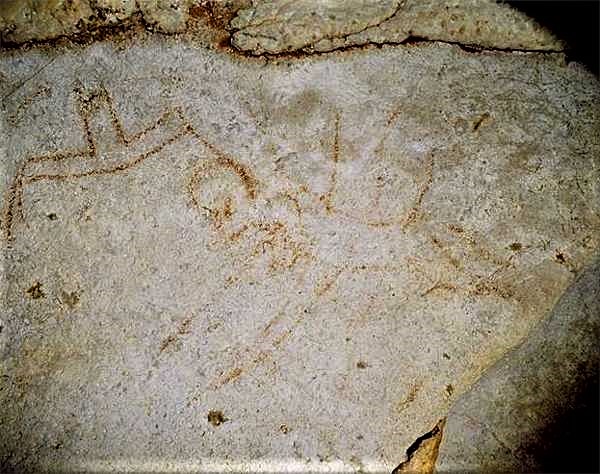
If we study thoroughly the name and the symbols of these texs, we understand that the Book of the Dead, “ru nu peret em heru”, was a magic and ritual formulary used to “simplify” the reincarnation of the ancestor. The literal meaning of the title is “Book of Coming Forth by Day”. The strangeness of the words “coming forth” (i. e. “go out”) and “day” in a funeral text makes us think that the book helps more an unborn child that a dead man condemned to eternal life. Indeed, this is the meaning: “coming forth by day” means “to be (re)born”. According to the myth, the dead who reads or interprets the formulas becomes himself the god who wrote them: Toth, the ibis. The symbolism of the bird undoubtedly bring us back to the popular one: the bird as life-bringer (the stork) and the migratory bird like the swallow returning in spring, season of the rebirth of nature (Ragnarǫk). This symbolism is already present in the Neanderthal tradition: the cave paintings depict flying birds sitting on sticks or figures half man and half birds, just as symbols of reincarnation and life. The bird Toth is therefore the one who brings life and the dead man who becomes the god is a metaphor of is own rebirth (the sperm reaches the egg).
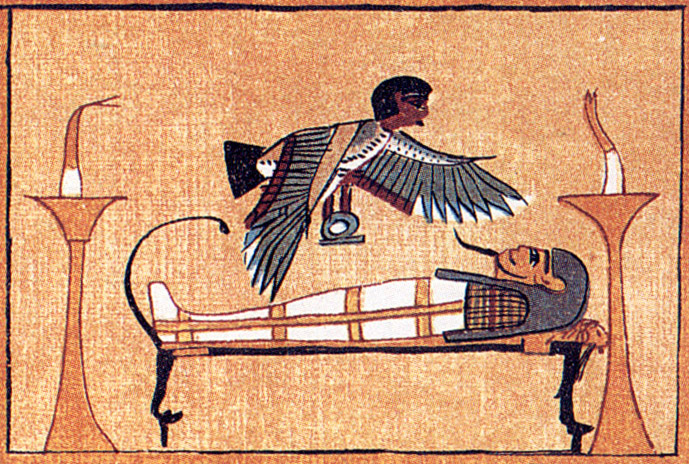
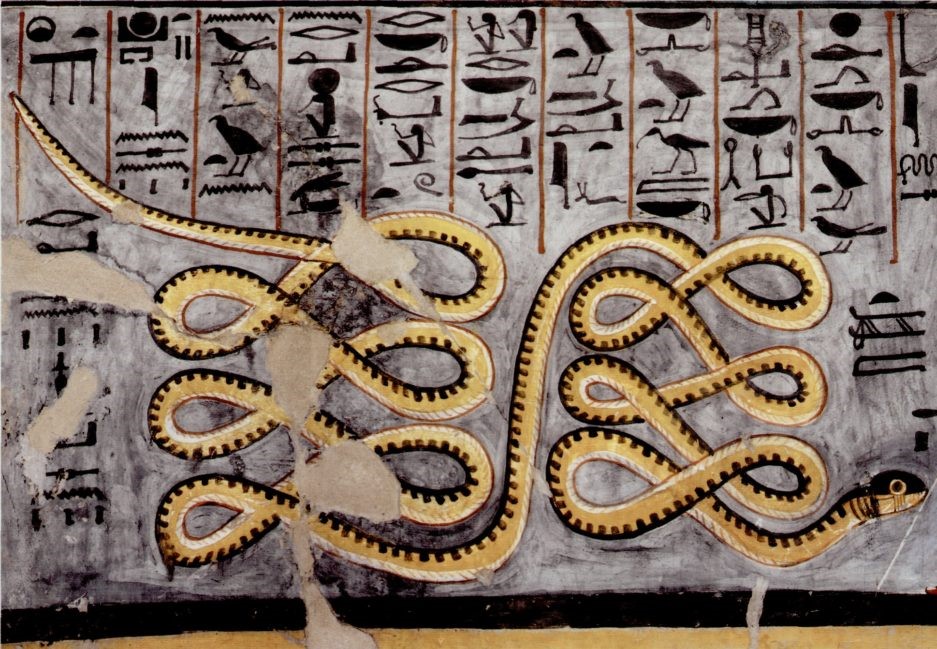
In the same way we can interpret the presence of Osiris, god of the Moon and the dead, but also god of the Sun and the Nile. The god-sun of the afterlife, the god of night (the Sun’s death), is the double of Ra, the god of the Sun of noon. Ra has a sparrow head (hieracocephalus, as Horus) and he has the circle of the Sun above his head, surrounded by the ureus (the snake, symbol of the Eternal Return, but also of the umbilical cord). Ra is the fulfilment of reincarnation, i. e. the accomplished rebirth, he is the child. At night Ra falls in the afterworld, carried by the boat Mesektet, and he merges with Osiris. Osiris, god of the dead and the Nile, is the fetus in the womb, in the uterus, the one who feeds himself through the umbilical cord and, at the same time, he is the dead in the underworld waiting to be reborn. The umbilical cord ends in the placenta, that’s why Osiris is the god of the Nile: the river represented fertility and wealth, because the vegetation grew luxuriant around it and the crops were possible thanks to its silt, the residue left by the Nile after the yearly floods. Moreover, the delta, if seen from above, reminds the shape of a tree (Yggdrasill), and both refers to the umbilical cord and the ramifications of the placental blood vessels.
Osiris is the dead, but also the fetus who, with the blessing of Toth, will choose the ancestor, the dead who will reincarnate. For this purpose, the scales decides if the soul of the dead is good, that is, worthy of being born again. In addition, the hat of Osiris has horns and feathers, both symbols of rebirth: the feathers are linked to the symbolism of the bird, the horns symbolize the struggle for life during the reproductive period of the bovids.
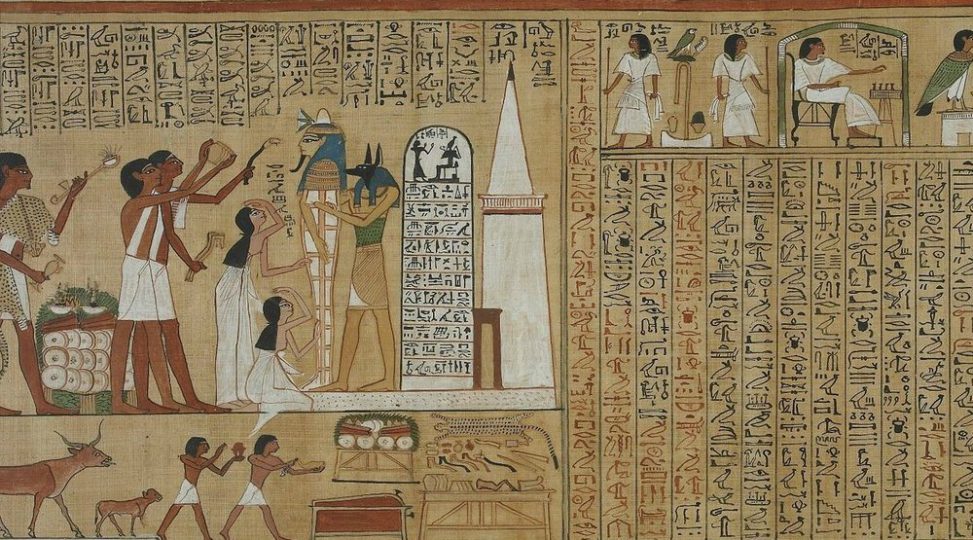
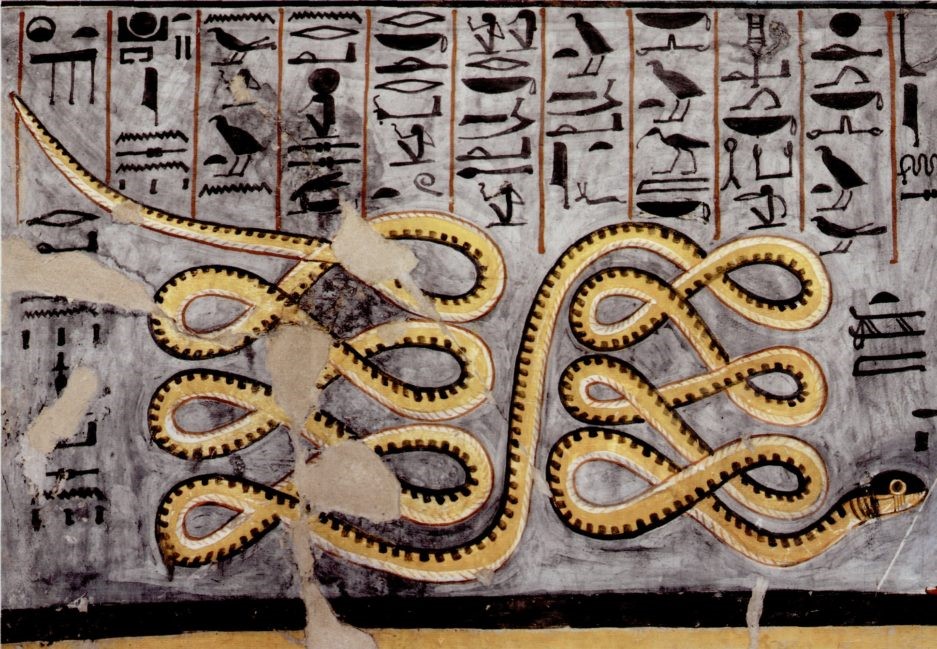
So, why does the dead become a god? In order to access the afterlife, the Fields of rushes (here, the rush can represent the umbilical cord) and before being judged by Toth and Osiris, the soul have to undertake an initiatory path: the dead climbs hills and descends into caverns (symbols of the womb) and he have to face animals and terrible anthropomorphic beasts (he must fight to be reborn, to reach the egg. See also the initiatory path of the Kumari in Nepal). After that, if he has passed the tests (if he proved honourable), he will be judged worthy of being (re)born. His soul (ba and akh) will rejoin Ra in order to cross the sky on the boat of Sun and to defeat Apopi, the enormous serpent: i. e. to defeat symbolically the snake-umbilical cord, to be born (or reborn), to “coming forth by day”… thus the dead becomes the bird Toth, symbol of rebirth, and Osiris, the fetus in the womb that chooses the ancestor, finally Ra, the newborn, the ancestor reincarnated.
***
VERSIONE ITALIANA
Belus – Per uscire al giorno
Album: Ursa Major, Ursa Minor
2014
On Youtube: https://www.youtube.com/watch?v=Aq1MC-kn7mw&feature=youtu.be
L’antico testo funerario egizio chiamato “Libro dei morti” raccoglie una serie di formule, o meglio singoli testi accompagnati da illustrazioni che iniziano con la parola ro, cioè “discorso”, “formula”, “incantesimo”. La loro funzione è strettamente legata al rito funebre: infondere nel defunto una conoscenza mistica dell’aldilà o identificarlo con la divinità stessa.
Nella religione egizia era di fondamentale importanza il rito della psicostasia, cioè la pesatura dell’anima del defunto (del cuore) al cospetto del dio Osiride (il dio resuscitato, quindi il dio dei morti, della Luna, del Sole e del Nilo). La pesatura era compito del dio Thot (dio della magia, della scrittura, delle scienze matematiche e geometriche, rappresentato con testa di ibis) e consisteva nel riporre sui piatti di una bilancia l’anima del defunto, accompagnata dal dio Anubi, e la piuma sacra di Maat, dea della giustizia. Il peso della piuma, naturalmente, doveva essere maggiore di quello dell’anima.
Se andiamo ad approfondire il nome e i simboli presenti in questi testi, possiamo interpretare il Libro dei morti, “ru nu peret em heru”, come un formulario magico e ritualistico atto a facilitare la reincarnazione del defunto. Il significato letterale del titolo è infatti “libro per uscire al giorno”. La stranezza delle parole uscire e giorno in un testo funerario ci fa pensare che il libro sia indirizzato più a un bambino nascituro che a un morto condannato alla vita eterna. Ed è infatti questo il senso: per uscire al giorno vale a dire “per uscire alla vita”, cioè (ri)nascere. Secondo il mito, il defunto che legge o interpreta le formule diventa il dio che le ha scritte, cioè Thot, l’ibis. La simbologia aviaria si può ricondurre senza dubbio a quella popolare, meglio conosciuta: l’uccello come portatore di vita (la cicogna, ad esempio) e l’uccello migratore come la rondine che ritorna in primavera, stagione della rinascita della natura (Ragnarǫk). Questa simbologia è presente già nella tradizione Neanderthal: le pitture rupestri raffigurano uccelli in volo, posati su bastoni o figure mezze uomo e mezze uccello, proprio come simboli di rinascita e di vita. L’uccello Thot è quindi colui che porta la vita e il defunto che si impersona in lui è metafora della sua stessa rinascita.
Allo stesso modo si può interpretare la presenza di Osiride, dio della Luna e dei morti, ma anche del Sole e del Nilo. Il dio-sole dell’aldilà, della notte, è la controparte, l’altra faccia della medaglia di Ra, il dio del sole del meriggio. Ra è ieracocefalo (testa di sparviero) e ha il disco del sole sul capo circondato dall’ureo (il serpente, simbolo dell’eterno ritorno ma anche del cordone ombelicale), è il compimento della reincarnazione, cioè l’avvenuta (ri)nascita, è il bambino. Ma di notte Ra scende nell’oltretomba sulla barca Mesektet, fondendosi a Osiride. Osiride, dio dei morti che rappresenta anche il Nilo, è il feto nel grembo materno, nell’utero, che si nutre attraverso il cordone ombelicale e, contemporaneamente, il defunto nel “regno dei morti” che attende di rinascere. Il cordone ombelicale termina nella placenta, ed ecco perché Osiride è il dio del Nilo: per gli egizi il fiume rappresentava la fertilità, l’abbondanza, perché attorno ad esso la vegetazione cresceva rigogliosa e le coltivazioni erano possibili grazie al limo, la terra residuale che il Nilo lasciava dopo le inondazioni. Il delta del fiume ricorda inoltre un albero (Yggdrasill), ed entrambi rimandano al cordone ombelicale e alle ramificazioni dei vasi sanguigni della placenta.
Quindi Osiride è il feto che con la benedizione di Thot sceglierà l’antenato, il defunto in cui reincarnarsi e, perché questo possa accadere, la bilancia decide se la sua anima è buona, cioè degna di rinascere. Inoltre il copricapo di Osiride presenta corna e piume, altri due simboli di rinascita: le piume sono riconducibili alla simbologia dell’uccello, mentre le corna sono il simbolo della lotta per la vita nel periodo riproduttivo dei bovidi.
Ma perché il defunto diventa dio? L’anima del defunto per accedere alle soglie dell’aldilà, i Campi dei giunchi (il giunco sembra rappresentare il cordone ombelicale) e prima di essere posta sotto giudizio da Thot e Osiride, deve sostenere un vero e proprio percorso iniziatico: attraversa cancelli, colli e caverne (simboli del grembo materno) e deve affrontare animali e bestie antropomorfe terribili (deve lottare per la vita, per raggiungere l’ovulo). Dopo ciò, se avrà superato la prova (se si dimostrerà valoroso), dovrà essere giudicato degno di rinascere, e la sua anima (ba e akh) si ricongiungerà con Ra per attraversare il cielo sulla barca solare e per sconfiggere Apopi, rappresentato come un enorme serpente: quindi per sconfiggere simbolicamente il serpente-cordone ombelicale, cioè per venire al mondo, per uscire al giorno… e così il defunto diventa l’uccello Thot, simbolo di reincarnazione, e Osiride, il defunto che deve rinascere e il feto nel grembo materno, quindi Ra, il bambino nato, l’antenato finalmente reincarnato.
 Belus
Belus 